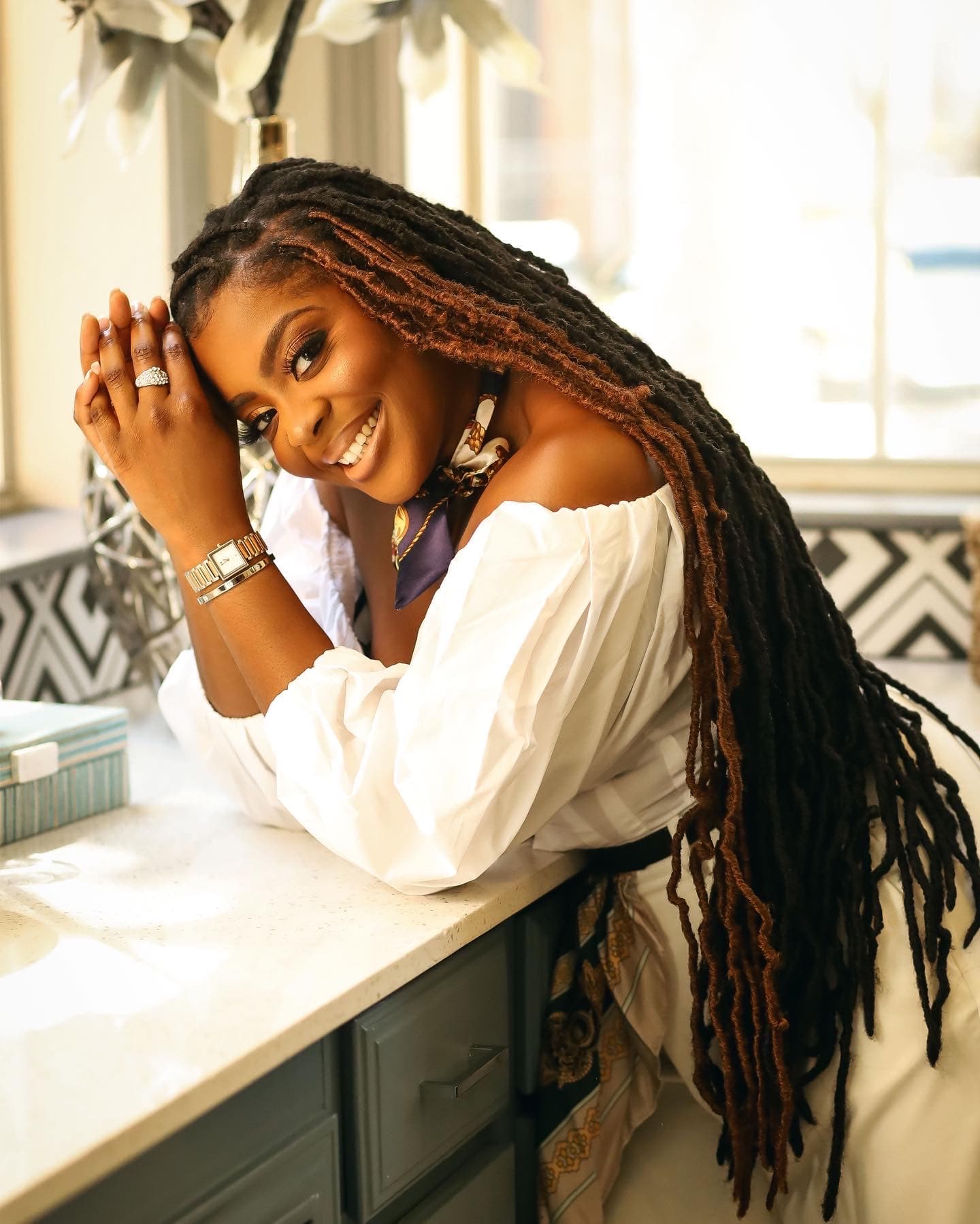
The fabric arrives. You unwrap it, hold it up to the light, and feel that quiet pressure settle in — the same pressure every other woman on that guest list is also feeling. Forty women. The same cloth. And somehow, you all have to show up looking like yourselves.
This is the particular creative challenge of asoebi — and it is a challenge worth taking seriously. Because there is a difference between attending a celebration and arriving at one. And how you interpret your asoebi fabric is one of the most honest expressions of personal style you will ever have to work with.
But there is a line — and it matters. The wedding is not yours. The bride is the focal point of that day. Standing out beautifully as a guest means understanding the difference between distinction and disruption.
The Fabric Is the Same — the Silhouette Is Yours
Most guests make the mistake of thinking the fabric determines the outcome. It does not. The silhouette does.
When forty women share the same cloth, what separates a memorable look from a forgettable one is almost always the cut. The proportion. The way the fabric moves — or doesn't — against the body. A flowing A-line tells a different story than a structured peplum. A draped one-shoulder silhouette reads entirely differently from a fitted straight gown, even in identical material.
This is where your relationship with your tailor becomes everything. Do not hand over your fabric with a vague reference photo and hope for the best. Come with intention. Think about the version of yourself you want to inhabit that day — and design toward her. Is she architectural? Fluid? Understated? Maximum? All of these are valid. What matters is that the answer is yours, not borrowed from whoever is trending.
What you want to avoid is the loudness that comes from trying too hard — the unnecessary cutouts, the overly dramatic trains on a church aisle that is not yours to command, the neckline that demands more attention than the vows. Distinction earned through thoughtful construction will always outlast spectacle.
Accessories Are Where You Make Your Statement
If the silhouette is your structure, accessories are your signature. And for asoebi styling in particular, this is the area where most women either play it far too safe or tip into excess.
The gele, for many, is the first decision. A well-tied gele in a fabric that complements — not competes with — your asoebi is one of the most elegant choices you can make. The colour, the height, the tilt — all of it communicates something. A sharply folded gele in a deep contrasting tone elevates a simple silhouette entirely. A softer wrap in a tonal shade keeps the focus on the dress. Neither is wrong. But they are not the same statement.
Beyond the gele, think in layers. One considered jewellery moment — a collar necklace, a stack of bangles, a single bold cuff — lands better than everything at once. Your bag and your shoes are finishing details, not afterthoughts. A metallic sandal or a sculptural clutch in a complementary tone can lift the whole look without demanding the room.
What I always say to my clients is this: if every element of your outfit is speaking at the same volume, nothing is actually being heard.
Knowing Your Role Is Part of the Style
There is something deeply cultural about asoebi that I want to name plainly. You are not there to be admired alone. You are there as part of a collective — a visual expression of love and solidarity around the bride and her family. That is a beautiful thing. It does not diminish you.
The women who understand this always look the most graceful. They dress in a way that says I belong here and I am fully myself — not look at me instead. There is no competition with the bride in their energy, and it shows in their choices. Their colours do not clash with her palette. Their silhouettes do not mimic her gown. They are not wearing all-white to a wedding where white is sacred to the couple.
These are not restrictions. They are the parameters that make the creative challenge meaningful. A sculptor does not resent the stone. She works with it.
Your asoebi moment is an opportunity to be seen as someone who understands elegance on a deeper level — someone who can hold both individuality and occasion in the same outfit, without either one losing its integrity.
That is the real art of it.
If you're coordinating an upcoming event or looking for support with your guest look, explore GLO Styles — I work with women to translate their fabric into something that feels intentional, considered, and entirely theirs.