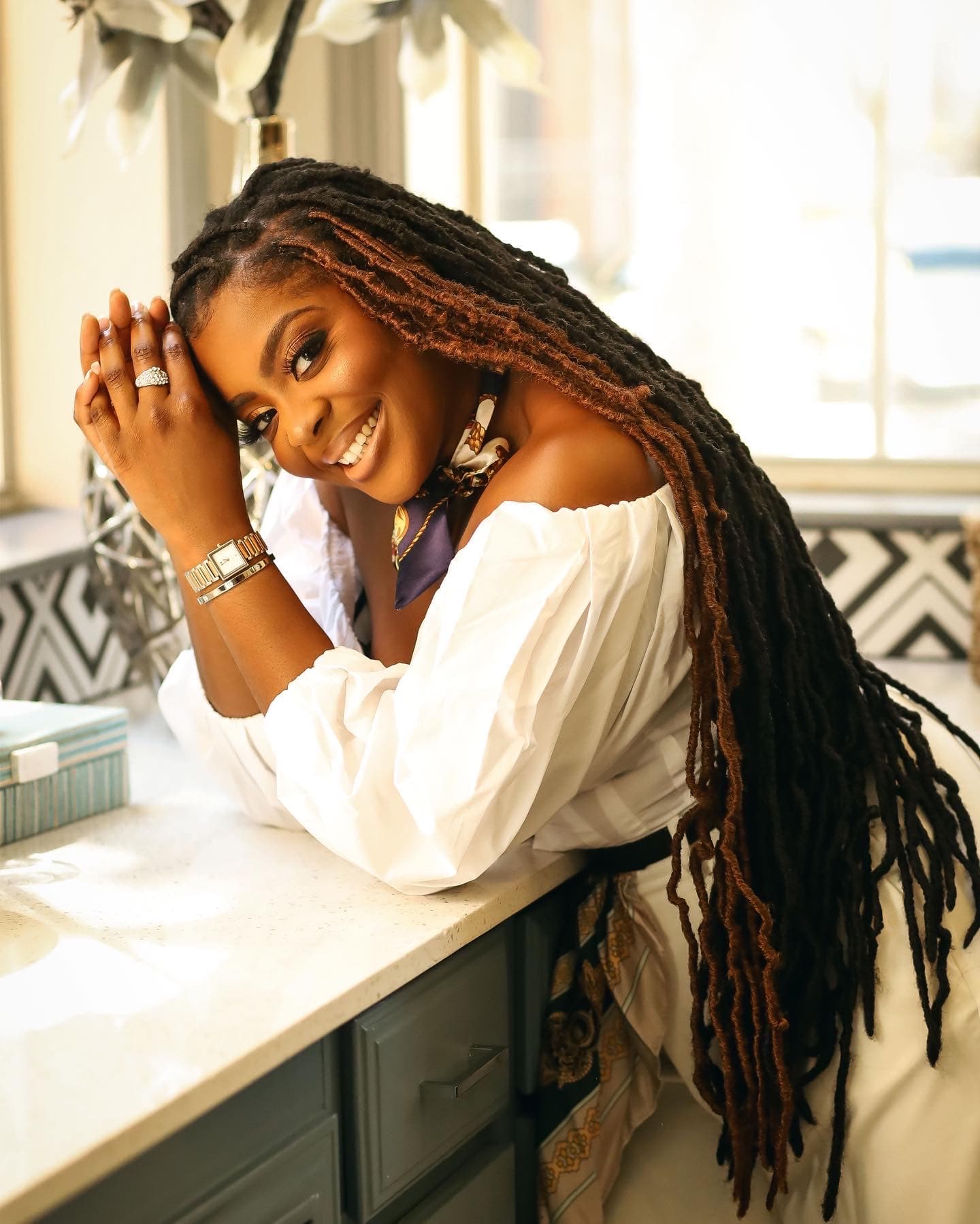
There is a particular kind of woman you notice at Nigerian weddings. She is not the loudest in the room. She has not arrived in a silhouette that belongs on a red carpet. But something about her — the way the fabric moves, the way the accessories feel considered rather than accumulated — makes you look twice, and then look again.
That is the woman I want to help you become when you wear your asoebi.
Asoebi is one of the most beautiful expressions of communal love that exists in our culture. You are not just wearing a colour — you are saying I am here, I celebrate you, I belong to this moment. But belonging to the moment does not mean disappearing into it. And it certainly does not mean competing with the woman whose day it is.
The line between standing out beautifully and overshadowing the bride is not always obvious. But it is navigable, and it begins with understanding what the line actually is.
The difference between radiance and rivalry
The bride is competing with no one. Her look, on that day, exists in its own category. Which means your job is not to dim yourself — it is to direct your energy wisely.
Overshadowing happens when a guest's choices pull focus away from the couple: a silhouette more dramatic than the bride's wedding gown, an elaborate gele that dominates every photograph, colours that visually clash with or outperform the bridal party's palette. These are not always intentional. Often they come from wanting so desperately to look good that the context of the day gets forgotten.
Standing out beautifully, on the other hand, is about specificity. It means making choices that are so clearly and confidently yours that they read as personal rather than performative. The woman who stands out beautifully at a wedding is memorable because of how she carries herself within the event — not in spite of it.
Restraint, done well, is not a sacrifice. It is a skill.
Where the real styling decisions live
Asoebi guests are often working with the same fabric. That constraint is, in many ways, a gift — because it forces creativity into the details rather than the statement.
The silhouette is your most powerful tool. An ankara or lace fabric worn in an A-line cut with quiet structure will almost always read more elegantly than the same fabric piled into excessive layers or over-embellished with extras. Ask your tailor what the fabric wants to do — and let it breathe.
Accessories are where your personality lives. A single pair of statement earrings or a sculptural bracelet will do far more for your look than wearing everything at once. I always say: choose two things to be interesting, and let the rest be quiet.
Your gele or headwrap, if you choose to wear one, should complement rather than command. A beautifully tied medium gele in the same or tonal fabric says I came prepared. An extraordinary architectural gele — unless the bridal party themselves are wearing them — tilts toward a different kind of statement.
Colour harmony matters more than people realise. If you are wearing a fabric with a gold undertone, your accessories, shoes, and makeup should be in conversation with that — not fighting against it. Unity within your own look is what makes you appear effortlessly put-together rather than dressed for the wrong occasion.
The question worth asking before you get dressed
Before you finalise your look, I want you to sit with one question: Who am I dressing for today?
Not in a self-sacrificing way. You are allowed to want to look beautiful — that desire is entirely reasonable and valid. But the most elegant guests I have seen at weddings are the ones who understand that their presence is in service of the day, and that understanding actually frees them. They are not anxious. They are not over-correcting. They are simply, fully themselves — within the context of something larger than themselves.
That is what asoebi was always meant to be. A collective expression. A shared celebration. Your chapter inside someone else's story.
When you arrive dressed with that intention — with fabrics well-fitted, accessories considered, and energy genuinely celebratory — you will be remembered. Not because you tried to outshine anyone, but because you understood the room and still chose to be luminous within it.
That is the art. And it is entirely possible.
If you are coordinating an upcoming event or looking for support with your guest look — whether you are navigating fabric choices, silhouette decisions, or how to bring your whole self to a celebration without second-guessing it — explore GLO Styles, and let's build your look together with the intention it deserves.