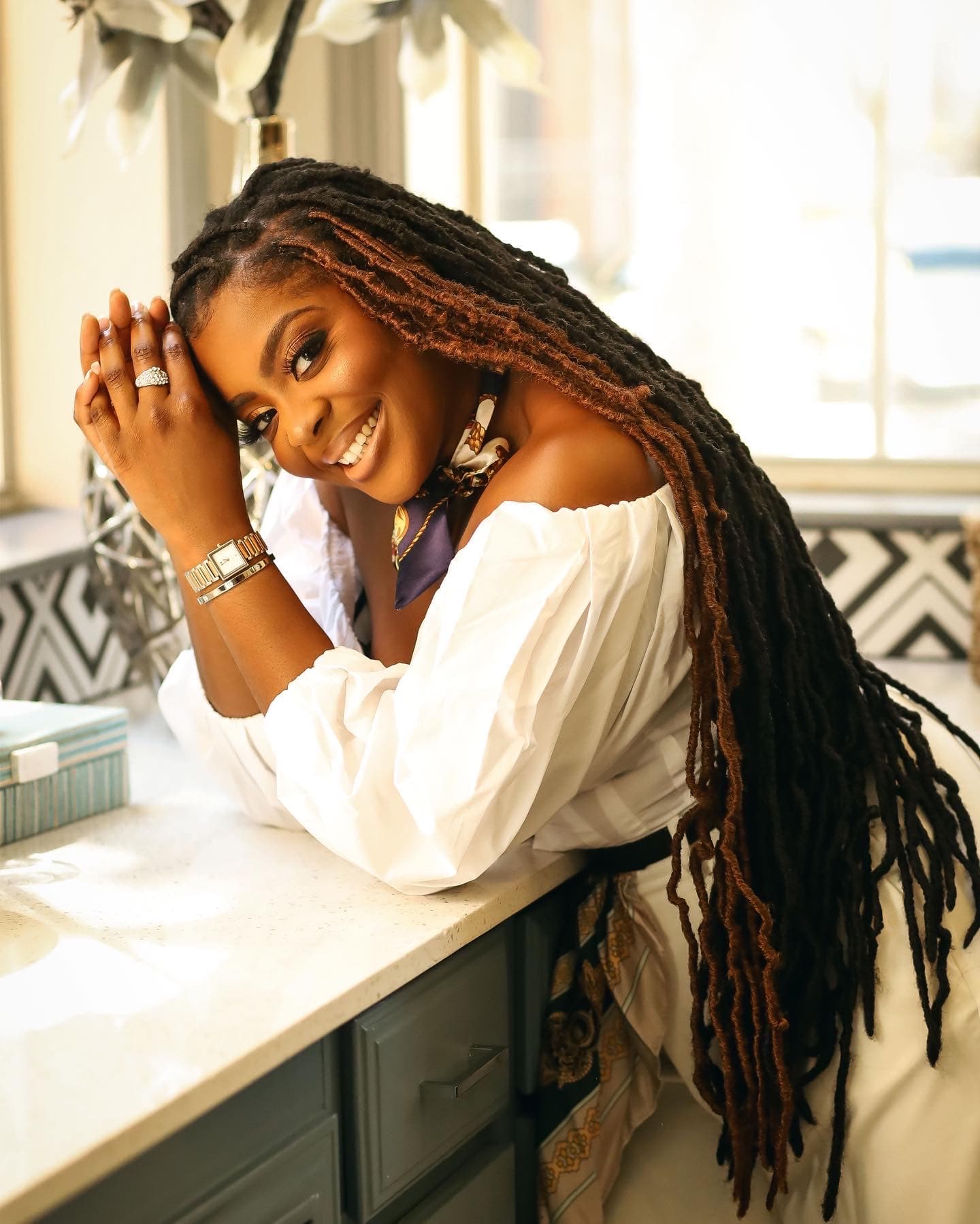
There is always that one guest. The one whose asoebi looks so considered, so effortlessly elevated, that your eyes keep finding her across the room — and yet somehow, she never feels like she is competing with the bride. That is not an accident. That is intention.
Wearing asoebi well is one of the quieter arts of Nigerian celebration culture. You are working within a shared fabric, a shared colour, sometimes a shared silhouette — and yet the women who understand personal styling know that the constraints are not a limitation. They are the invitation.
So how do you stand out beautifully without crossing the line? How do you honour the bride and still walk in as the fullest version of yourself?
The Distinction Between Standing Out and Showing Up
There is a difference between wanting to be seen and wanting to overshadow. One is about presence. The other is about dominance. And the best-dressed guests at a Nigerian wedding have always understood this.
Standing out as an asoebi guest is not about wearing the most dramatic gown or the highest gele. It is about the quality of your choices — the details that signal that you thought carefully about how to wear this fabric, for this occasion, as this woman.
The bride has her white. Her gold. Her bridal colours, whatever they may be. Your role is not to compete with her palette — it is to complement the celebration she has created. When you understand that, the entire approach to getting dressed shifts.
Where the Magic Actually Lives
Most asoebi guests make their choices at the level of the fabric alone. They pick the style they want, hand it to their tailor, and consider it done. But the women who consistently look extraordinary are thinking three steps further.
They are thinking about the cut — how a well-tailored fit changes not just the silhouette but the entire feeling of a look. Asoebi fabric styled with a defined waist, a beautifully finished neckline, or a sleeve with real intention reads as elegance even in a crowd of women wearing the same material.
They are thinking about accessories — not as an afterthought, but as the punctuation of the look. A statement earring where others wear something small. A headwrap in a complementary tone instead of the standard gele, or a gele tied with more drama and structure than anyone else in the hall. Shoes and a bag that speak the same language as the outfit, not a different dialect entirely.
And they are thinking about finish — the makeup that is considered rather than default, the fragrance that makes people lean in, the posture that carries it all. These are not vanity details. They are the difference between wearing an outfit and owning it.
What they are not doing is reaching for the most extravagant, the most loud, the most more — because more is not always the answer. Refinement usually is.
The Unspoken Etiquette No One Tells You
There are things that are understood in Nigerian wedding culture, even if they are rarely said aloud. You do not wear white. You do not arrive in an outfit that is clearly more bridal than the bride's. You do not let your accessories become a costume that pulls focus from the woman of the day.
But beyond those obvious lines, there is something subtler worth naming: the bride notices. She notices the guest who came dressed with care. She notices the one who looked like she understood the assignment. And that is not about competing — it is about celebrating. When you look extraordinary in her colour, at her wedding, you are adding to the beauty of her day, not taking from it.
The guest who overshadows the bride is usually not trying to. She has simply not thought about what her choices are saying in context. Intention changes everything.
Think about the story your look tells within the room. Does it say I am here for this celebration? Or does it say I am here for myself? Both can be true at once — but the order matters.
A well-styled asoebi look is one of the most generous things a wedding guest can offer. It says: I took this seriously. I showed up with care. I am part of this beautiful thing you have created.
That is presence without competition. That is how you stand out and honour the bride in the same breath.
If you're coordinating an upcoming event or looking for support with your guest look, explore GLO Styles — because the details that make the difference are always worth thinking through properly.