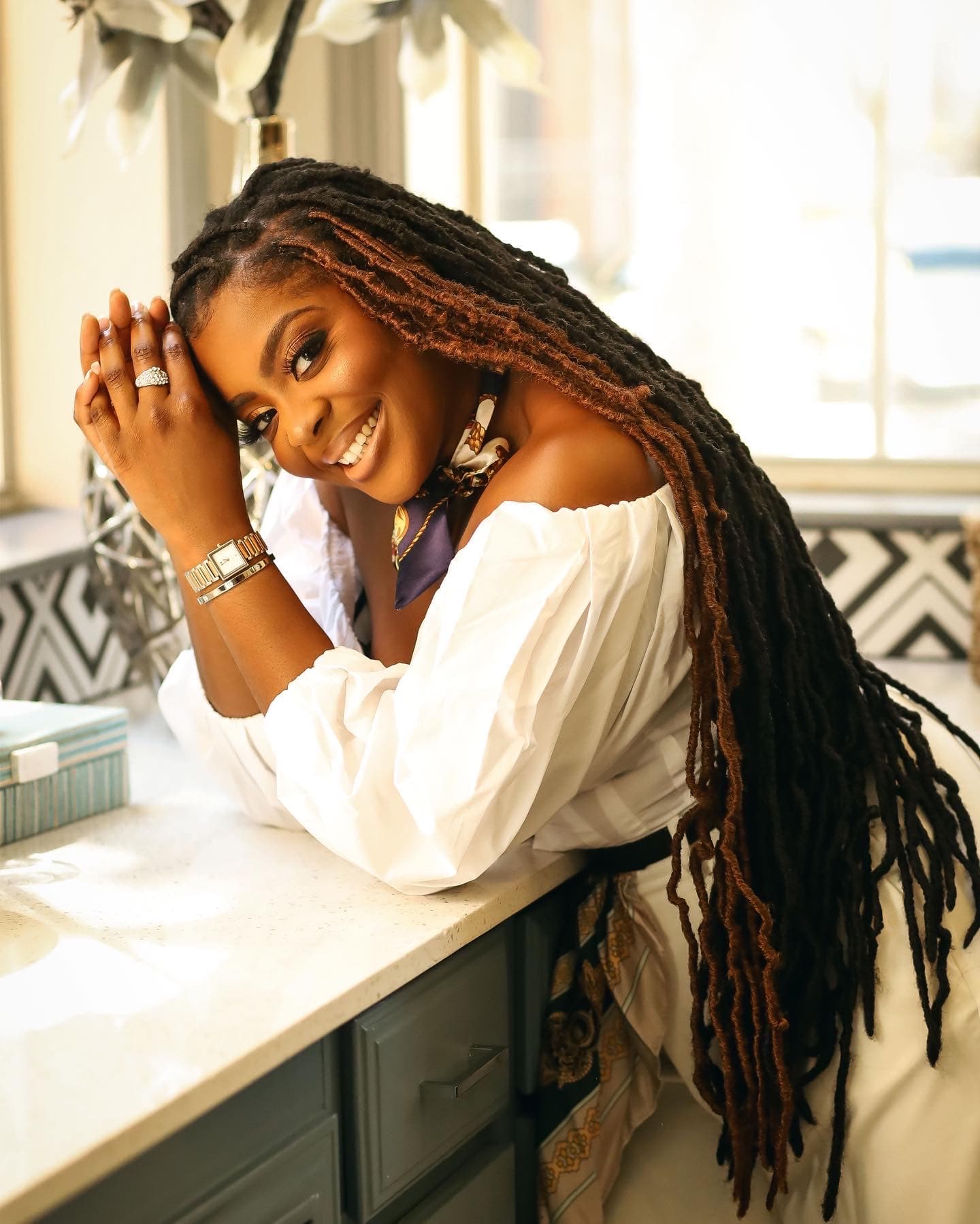
Lace Asoebi Styles
1. The Structured Lace Peplum Set
A fitted peplum blouse with precise seaming at the waist, paired with a floor-length skirt with a centre-back slit. The peplum should be sharp — not a soft ruffle but a deliberately structured flare that creates a clean silhouette.
What makes it work: The structure. Lace can look beautiful or it can look formless. The difference is almost always in the quality of the underlying structure — a well-boned bodice, a cleanly cut peplum, a skirt that hangs without pulling.
Best for: Reception events, church ceremonies, high-formality occasions.
2. The Off-Shoulder Lace Gown
A floor-length gown with a fitted off-shoulder neckline and a slight A-line or mermaid silhouette. Simple and elegant, with the drama coming from the neckline and the fabric quality rather than from embellishment.
What makes it work: The neckline. Off-shoulder lace is particularly beautiful because it reveals the collarbone and décolletage in a way that feels simultaneously formal and sensual. Keep accessories minimal — a pair of elegant earrings, nothing around the neck.
Best for: Evening receptions, December parties, high-profile celebrations.
3. The Lace Co-Ord Set
A matching lace top and wide-leg trouser — both in the same lace fabric. This is a contemporary take that works particularly well with lace because the fabric has enough visual richness to hold the trouser silhouette without looking casual.
What makes it work: The trouser must be wide-leg with a clean break at the foot. A narrow lace trouser often looks ill-considered. The top should be tucked or styled to define the waist.
Best for: Women who prefer trousers; contemporary weddings with a more fashion-forward brief.
4. The Lace Cape Gown
A fitted lace gown — midi or floor length — with a dramatic lace cape that falls from the shoulders. The cape is the statement; the gown beneath should be clean and simple.
What makes it work: The contrast between the drama of the cape and the simplicity of the underlying gown. If both compete for attention, the look becomes busy.
5. The Two-Tone Lace Look
Lace fabric in the asoebi colour, with a base fabric or lining in a contrasting or complementary shade that shows through the lace weave. Dusty pink lace over champagne, for example, or navy lace over cobalt.
What makes it work: The underlay choice. The colour that shows through the lace becomes as important as the lace itself. Choose with the same care you would a solid-colour outfit.
Ankara Asoebi Styles
6. The Structured Ankara Blazer Set
A tailored Ankara blazer — either cropped or hip-length — with matching wide-leg trousers in the same print. Bold, contemporary, and completely distinct from the peplum-and-skirt majority.
What makes it work: The tailoring. An Ankara blazer that fits precisely — that sits on the shoulder correctly, that is the right length for the body wearing it — looks extraordinary. An Ankara blazer in a poor fit looks like a costume.
Best for: Outdoor events, traditional wedding ceremonies, guests who want to be genuinely memorable.
7. The Ankara Midi Wrap Dress
A wrap dress in the Ankara fabric — fitted across the bodice, wrapping at the waist, with a flared skirt that falls to the mid-calf. This is a deeply flattering silhouette that works across body types and occasions.
What makes it work: The wrap detail defines the waist naturally, accommodates different body shapes, and creates a beautiful flutter when the wearer moves. Choose a fluid-weight Ankara rather than a stiff one.
8. The Ankara Ball Skirt with Simple Top
A full, structured skirt in the Ankara print — floor-length, with significant volume at the hem — paired with a simple, fitted neutral top. The skirt is the entire statement; everything else is in service of it.
What makes it work: The restraint of the top. When the skirt is this dramatic, a loud top creates chaos. A well-fitted neutral top (cream, black, or a single colour pulled from the Ankara print) allows the skirt to breathe.
9. The Ankara Asymmetric Hem Dress
A fitted dress with an asymmetric hemline — higher at the front, longer at the back, or cut on a diagonal. The asymmetry creates movement and visual interest that a straight hem does not.
What makes it work: The precision of the cut. An asymmetric hem must be executed with absolute precision — any unevenness reads as a mistake rather than a design choice.
10. The Ankara Peplum with Neutral Skirt
Ankara fabric made into a peplum top, paired with a plain skirt in a neutral colour pulled from the print (cream, black, camel) rather than another busy fabric.
What makes it work: The breathing room. Pairing the print top with a neutral skirt allows the Ankara to be the focal point without the visual noise of two competing fabrics.
11. The Colour-Blocked Ankara Gown
A floor-length gown using the Ankara print in strategic colour-blocked panels — perhaps the bodice in one print orientation, the skirt in another, or a plain fabric panel at the centre front.
What makes it work: Colour blocking in Ankara must honour the print's own colour story. If the print contains multiple colours, the colour-blocked panels should draw from those existing tones.
12. The Ankara Kimono Jacket Over Simple Dress
A knee-length or floor-length kimono jacket in the Ankara fabric, worn open over a simple matching or complementary dress underneath. The kimono is unstructured and fluid.
What makes it work: The contrast between the drama of the printed kimono and the simplicity beneath it. The kimono becomes a statement layer rather than a garment competing for attention.
Mixed Fabric and Contemporary Asoebi Styles
13. The Fabric-Panelled Evening Gown
A floor-length gown in a neutral fabric (black, cream, navy, champagne) with strategic panels, inserts, or overlays in the asoebi fabric — perhaps at the bodice, as a flowing skirt overlay, or as a dramatic back insert.
What makes it work: This approach allows women to wear a supremely flattering neutral gown while still incorporating the asoebi fabric in a meaningful way. It is particularly powerful for women whose most flattering colour does not match the asoebi.
14. The Two-Piece Crop Set
A cropped peplum or structured crop top with a matching high-waisted full skirt — both in the asoebi fabric. Not a micro-crop, but a waist-grazing length that pairs naturally with a high waist.
What makes it work: The proportion of crop to skirt. The top should finish precisely at the natural waist, and the skirt should begin there. Any gap creates a midriff-baring look that may not be appropriate for all events; any overlap defeats the two-piece aesthetic.
15. The Floor-Length Skirt with Embellished Blouse
A simple, fluid floor-length skirt in the asoebi fabric, paired with a heavily embellished or beaded blouse — either in the same fabric or in a complementary material (satin, silk, georgette).
What makes it work: The interplay between the simplicity of the skirt and the richness of the blouse. When both pieces compete in their detail, neither wins.
16. The Dramatic Sleeve Dress
A fitted, relatively simple dress in the asoebi fabric with one significant design decision: dramatic sleeves. Bishop sleeves, oversized puff sleeves, or dramatic fluted sleeves in the same or contrasting fabric.
What makes it work: Restricting the drama to the sleeves. The rest of the dress should be calm — fitted, simple, clean — so that the sleeves read as intentional rather than overwhelming.
17. The Cut-Out Gown
A floor-length gown in the asoebi fabric with considered cut-out details — waist windows, back openings, or side panels — that reveal skin in strategic places.
What makes it work: The precision and placement of the cut-outs. This style requires an excellent tailor and should be approached carefully; poorly executed cut-outs can read as unflattering rather than daring.
18. The Jumpsuit
A wide-leg or tailored jumpsuit in the asoebi fabric — one of the most striking asoebi interpretations available. In lace or Ankara, a well-made jumpsuit is genuinely memorable.
What makes it work: The waist detail. A jumpsuit in lace or printed fabric must have a defined waist — through a belt, cinched seaming, or a wrap detail — otherwise it risks looking shapeless.
Traditional and Formal Asoebi Styles
19. The Full Iro and Buba
A traditional Yoruba two-piece: the iro (wrapper skirt), buba (blouse), and ipele (shoulder sash), all in the asoebi fabric, worn with a beautifully tied gele. This is the most culturally rich asoebi option and one of the most powerful.
What makes it work: The quality of the gele. The iro and buba create the foundation; the gele is the crown. A stunning gele on a simple iro and buba outperforms an elaborate gown without headwear in almost every traditional setting.
20. The Iro and Buba With Contemporary Twist
The traditional iro and buba silhouette interpreted with contemporary tailoring — a more fitted buba, a structured iro rather than a draped wrapper, a different neckline or sleeve detail that signals modernity while honouring tradition.
What makes it work: Respect for the tradition within the contemporary update. Changes should feel considered, not dismissive.
21. The George Wrapper Set
For Igbo events or events where George is the specified fabric — the traditional George wrapper (tied at the waist) with a matching or complementary blouse and heavy gold jewellery. Worn with a headtie in the same or complementary fabric.
What makes it work: The weight and quality of the George fabric, which should drape cleanly and luxuriously, and the jewellery — coral or heavy gold — that anchors the look in its cultural context.
Styling Variations That Elevate Any Asoebi Look
22. The Monochromatic Head-to-Toe
Asoebi gown or set, headwrap in the same or tonal fabric, shoes in a matching or complementary shade, minimal jewellery. The monochromatic commitment creates an effect of tremendous visual elegance.
23. The Bold Contrast Headwrap
Asoebi in one colour, with a dramatic contrasting headwrap in a different but intentionally chosen colour. Works particularly well when the contrasting colour appears within the asoebi fabric itself.
24. The Statement Accessory Approach
A relatively simple asoebi outfit — well-fitted but not elaborate — elevated entirely by a single extraordinary accessory: a pair of dramatic earrings, a statement necklace, or a headpiece that commands the room.
25. The Elegant Minimalist Take
The same asoebi fabric everyone else is wearing, made into the simplest possible silhouette — a clean column dress, a simple A-line, a fitted midi — in the best possible quality and fit. The woman in the room who looks most effortless is often the one who has done the least, but done it with the most precision.
The Most Important Thing
All twenty-five of these looks share one quality: intention. The woman who stands out at a Nigerian wedding is not usually the one with the most elaborate outfit — she is the one who clearly made deliberate choices. Whose outfit fits. Whose accessories are considered. Who looks like she knew exactly what she was going for.
That intention is available to every asoebi look, regardless of its complexity or its cost.
Related: How to Rock Your Asoebi Without Looking Like Everyone Else · How to Choose the Right Asoebi Fabric · The Complete Asoebi Style Guide