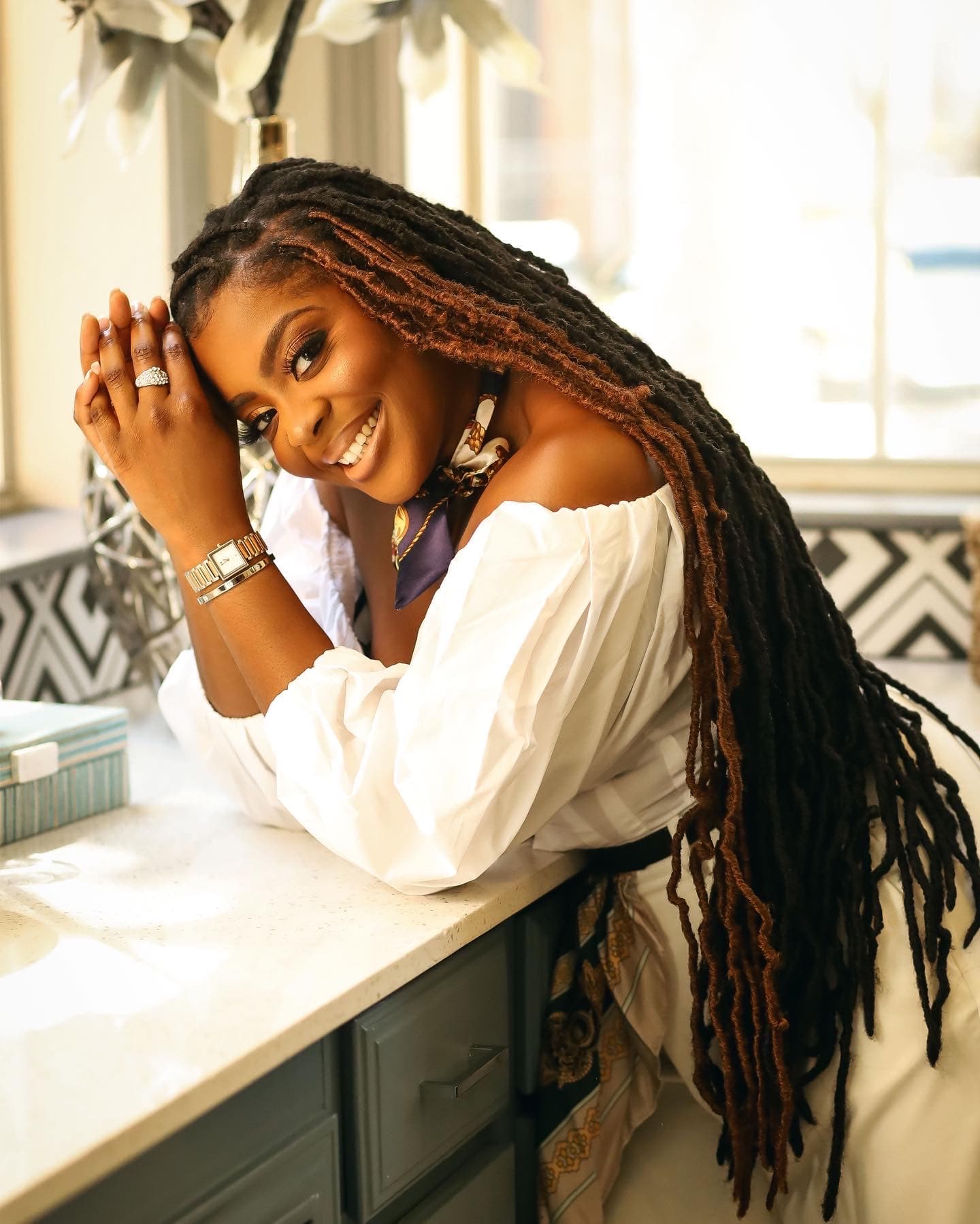
There is a particular kind of tension that lives in the asoebi group chat. Someone suggests a colour. Someone else goes quiet. A third person says "it's fine" — which, as we all know, means it is not fine. The fabric gets ordered anyway, and by the day, someone is standing in a shade that does nothing for her skin, squinting into a camera she no longer feels confident in front of.
This happens far more often than it should. And it is almost always the result of choosing asoebi colours based on what looks beautiful in isolation — on a swatch, on a mood board, pinned from someone else's wedding — rather than what will work across a range of real women, real complexions, and real lighting conditions on the day.
Choosing asoebi is a act of collective care. When you get it right, every woman in that group looks intentional. When you get it wrong, the photographs tell the truth.
The Relationship Between Colour Temperature and Skin Tone
Every colour sits somewhere on a spectrum between warm and cool. Warm colours carry undertones of yellow, orange, and red. Cool colours lean towards blue, purple, and green. And most human skin — regardless of how deep or fair — has an underlying undertone that either harmonises with warmth or is lifted by cool.
For deeply melanated skin tones, which is the majority of the room at most Nigerian weddings, rich warm shades are often transformative. Burnt orange, terracotta, deep gold, rust, saffron, and olive can make deep brown skin glow from within in a way that pale or washed-out colours simply cannot. These are the shades that do not disappear against the skin — they respond to it.
That said, certain cool tones are just as powerful on deep complexions when they are saturated enough. A true cobalt blue, an emerald green, a deep plum — these colours hold their weight. What tends to fail is anything dusty or muted in the cool range: dusty rose, mauve, lavender, soft lilac. On deep skin, they can flatten. On lighter complexions, they can wash out entirely. They look beautiful on a hanger and difficult in a photograph.
If your group spans multiple skin tones — and most do — your safest and most stunning territory is saturated, jewel-toned, or earth-warm. These are the colours that have range.
What the Camera Sees That Your Eye Misses
Natural light is generous. Camera flash is not. Indoor receptions with mixed artificial lighting can shift colour entirely — what looked like a warm champagne gold in the shop can photograph as a dull beige. What looked like a vibrant coral can read as orange under fluorescent light and pink under candle.
This is why I always advise thinking not just about what a colour looks like in your hand, but what it will do under pressure — under a ring light, a photographer's flash, afternoon sun at the garden reception, or dim hall lighting at 10pm.
Colours that consistently perform well across all of these conditions share a few qualities. They are saturated — meaning there is enough pigment in them that they do not disappear or distort under light changes. They have contrast — enough visual weight to read clearly against both dark and light skin. And they tend to avoid the tricky middle ground of being neither here nor there. A colour should commit.
Dusty, pastel, and highly metallic colours without depth are the most unpredictable photographically. Deep jewel tones, warm earth shades, and high-contrast combinations — think deep green and gold, navy and bronze, wine and blush — tend to hold their beauty through every lens and every lighting condition.
Making It Work for the Whole Group
Here is what I have seen work beautifully time and again: rather than prescribing one single fabric shade to every woman in the group, thoughtful hosts are increasingly allowing variation within a palette. The chief bridesmaids might wear the deepest shade; others choose from a harmonious family of colours. This approach gives each woman the freedom to select the tone within the palette that works best for her, while still creating visual cohesion in the photographs.
If you are set on a single colour for everyone — which is entirely valid — test it. Gather two or three women with different complexions, hold the fabric up to their faces, take photographs in natural light and indoors, and see what you are actually working with before the full order goes in.
Asoebi is not just a colour choice. It is a statement that every woman in your circle deserves to feel and look her best on your day. That is worth the extra thought.
If you're coordinating an upcoming event or looking for support with your guest look, explore GLO Styles — I work closely with hosts and guests to take the guesswork out of group dressing, so that on the day, everyone in the frame feels exactly as good as they look.