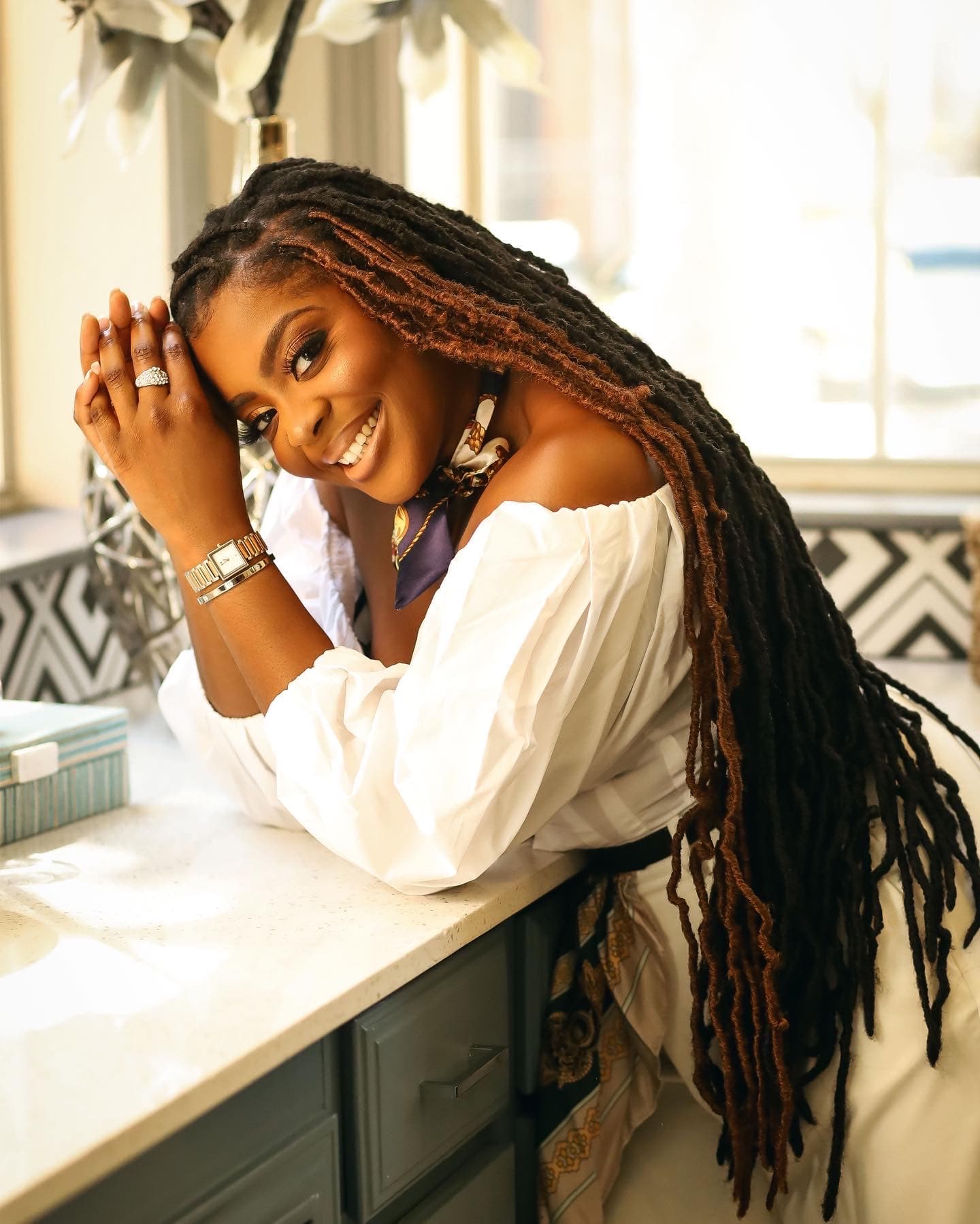
There is a moment — usually around the second fitting, or when the WhatsApp group starts sharing photos — when someone quietly admits that the colour doesn't look right on her. The fabric is beautiful. The occasion is joyful. But something in the shade is washing her out, or deepening in a way she didn't expect, and she doesn't feel the way she thought she would.
This is the part of asoebi coordination that nobody talks about enough.
Choosing a colour for a group is an act of care. And when it's done well — when every woman walks into that hall feeling like the colour was chosen with her in mind — you can feel it in the room. You can certainly see it in the photographs.
Why Colour Behaves Differently on Different Skin Tones
The same fabric swatch can look entirely different on two women standing side by side. This isn't a flaw in either woman — it's simply how light, pigment, and undertone interact. Understanding this is the first step toward making a colour decision that serves everyone in your group.
Skin tones carry undertones: warm, cool, or neutral. Warm undertones have golden, yellow, or peachy hues beneath the surface. Cool undertones lean toward blue, red, or pink. Neutral undertones are a balance of both. These undertones don't always correspond to how deep or fair a complexion is — a deep-skinned woman can have cool undertones, and a lighter-skinned woman can run warm.
When a colour clashes with someone's undertone, it doesn't just look slightly off in person — it photographs poorly. The camera doesn't forgive in the way that a forgiving eye might. Certain shades will pull the skin grey, others will make the complexion look flat or washed. The photographs are permanent. The feeling of standing in a group photo and not quite belonging in your own reflection — that stays too.
Colours That Work Across the Widest Range of Skin Tones
The good news is that there are particular families of colour that consistently flatter a wide range of women, from very deep complexions to lighter ones — and perform beautifully under both indoor event lighting and outdoor Nigerian sun.
Rich jewel tones are among the safest and most stunning choices. Deep emerald, sapphire blue, amethyst, and burgundy carry enough depth and saturation to complement darker skin without dulling it, while still providing enough richness and contrast to look elegant on lighter and medium tones. These colours also hold their vibrancy in photographs — they don't fade into background noise the way pastels sometimes can.
Terracotta, rust, and warm earthy tones are another strong direction, particularly for daytime events or outdoor ceremonies. These shades carry warm golden undertones that harmonise with melanin-rich skin in a way that feels almost effortless. They read as warm and intentional on camera, and tend to glow under natural light rather than flatten.
What I would encourage you to approach with more thought: icy pastels, pale yellow, and certain shades of nude or blush that sit too close to the undertones of lighter complexions. They can disappear in photographs and, on deeper skin, sometimes pull ashy rather than soft. That doesn't mean they're off the table — it means they require more careful testing before a final decision is made.
The Practical Steps Before You Commit to a Fabric
Before ordering metres of aso-ebi for twenty or forty women, take two steps that most people skip.
First, pull together a small test group — ideally three to four women across different complexion depths — and drape a swatch of the fabric at the neckline. Don't hold it at arm's length. Bring it to the face. Then photograph it. Use flash once and natural light once. What you see in that image is far closer to what the final photographs will look like than any swatch viewed in a fabric market under fluorescent overhead lights.
Second, consider the venue's lighting. Indoor hall events with heavy artificial lighting will alter colour temperature significantly. Warm-toned fabrics tend to respond more graciously to warm artificial light. If your event is primarily indoors, a cool-toned fabric like silver-grey or lilac may need testing carefully before you commit.
The goal — and I want to say this clearly — is not to find a colour that simply looks good in a flat lay or on the mood board. The goal is for every woman who wraps herself in that fabric to feel like the occasion was made with her in mind. Because in so many ways, it was.
Coordination is a form of hospitality. When the colour is right, women arrive confident. When women arrive confident, the photographs take care of themselves.
If you're coordinating an upcoming event or looking for support with your guest look, explore GLO Styles.